Class A CDL Pre-Trip Inspection Checklist: What You Need to Know
The pre-trip inspection is one of the most detailed and commonly failed portions of the CDL skills test.
Let’s address the chief question that many students ask:
What Is Included in a Class A CDL Pre-Trip Inspection?
A Class A CDL pre-trip inspection includes a systematic safety check of the engine compartment, cab controls, brake systems, suspension, steering components, coupling system, and trailer to ensure the vehicle is safe to operate.
Examiners are not just looking for you to point at parts. The examiners expect you to identify components, explain what you’re checking, and state what defects you’re looking for.
Below is a simplified, structured checklist to help you prepare.
Engine Compartment Checklist (Front of Tractor)
When inspecting the engine area, you must identify components and explain that they are:
- Securely mounted
- Not cracked, bent, or broken
- Not leaking (fluids or air)
Key Engine Components to Check:
- Oil level (proper level, no leaks)
- Coolant level (secure cap, proper level)
- Power steering fluid (proper level)
- Alternator (secure, no frayed wires)
- Water pump (not leaking)
- Air compressor (secure, no leaks)
- Belts (no cracks, frays, excessive slack — no more than ¾ inch play)
- Hoses (no leaks, abrasions, bulges)
- Steering shaft (not bent, secure)
- Steering gearbox (no leaks, securely mounted)
This section establishes your ability to identify safety-critical mechanical systems.
We recognize that this may be daunting at first. If you’re preparing for your CDL training, review Our Programs for additional support.
In-Cab Inspection Checklist
This portion tests your knowledge of brake systems, gauges, and safety equipment.
Cab Safety Equipment:
- Seat belt (secure, not frayed)
- Fire extinguisher (fully charged, properly mounted)
- Spare fuses (if required)
- Reflective triangles (three required)
Gauges & Warning Lights:
- Oil pressure gauge (rises to normal range)
- Voltmeter (proper charging range)
- Coolant temperature gauge (rises gradually)
- Air pressure gauges (build to governor cut-out 120–140 PSI)
Air Brake Test (Must Be Performed in Order):
- Applied pressure test (3 PSI single / 4 PSI combination max loss)
- Low air warning activates before 60 PSI
- Spring brakes pop out between 20–40 PSI
If you need a refresher on the air brake procedure, review our simplified guide.
Coupling System Checklist (For Class A Combination Vehicles)
Because Class A vehicles pull trailers, coupling inspection is critical.
Fifth Wheel Area:
- Skid plate (properly greased)
- Locking jaws (fully locked around kingpin)
- Release arm (secure, locked in place)
- Mounting bolts (tight, not missing)
Air & Electrical Lines:
- No cuts, cracks, or abrasions
- Properly connected and secured
- No air leaks
Kingpin & Apron:
- Kingpin not bent
- Apron not cracked
- Gap between tractor and trailer is correct
Failure in this section can result in an automatic test failure.
For more information about Class A requirements, read Here.
Trailer Inspection Checklist
You must inspect the trailer just as thoroughly as the tractor.
Trailer Exterior:
- Landing gear (fully raised, secure)
- Frame (no cracks, bends, breaks)
- Suspension components (leaf springs, shocks, U-bolts secure)
- Brake chambers (not leaking, properly mounted)
- Slack adjusters (no more than 1 inch play with brakes released)
- Brake hoses (no cuts or leaks)
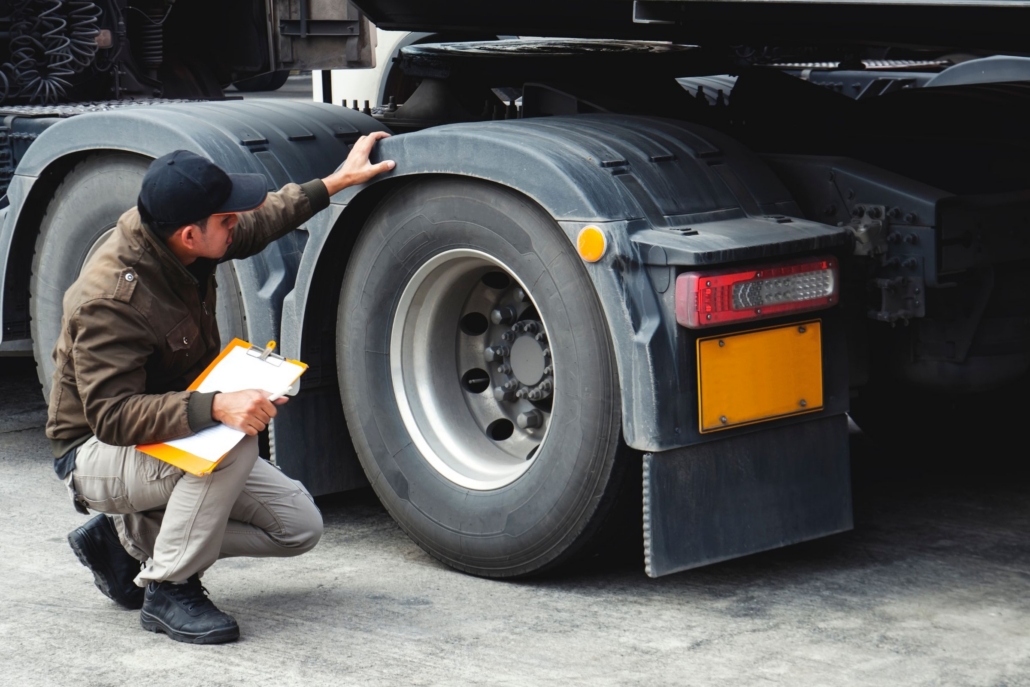
Tires & Wheels:
- Proper tread depth (minimum 2/32 steer, 1/32 others depending on state standards)
- No cuts or bulges
- Rims not bent or cracked
- Lug nuts tight, no rust trails
Lights & Reflectors:
- Clearance lights
- Brake lights
- Turn signals
- Reflectors clean and functional
Why the Pre-Trip Inspection Is So Important
The CDL pre-trip inspection proves that you understand:
- Vehicle safety
- Mechanical awareness
- Federal compliance standards
Commercial vehicles operate under strict federal oversight through the FMCSA. Proper inspection reduces breakdowns, accidents, and violations.
You can review Federal Inspection Guidelines on the FMCSA Site.
How to Pass the Pre-Trip Inspection
Success comes down to:
- Practicing your verbal explanation
- Following a consistent order
- Touching and identifying each component
- Stating what you’re checking for
- Staying calm and confident
The pre-trip inspection is all about memorization plus repetition.
And in a grand summary, a Class A CDL pre-trip inspection includes:
- Engine compartment checks
- In-cab brake and safety tests
- Coupling system inspection
- Full trailer walk-around
Mastering this checklist dramatically increases your chance of passing on the first attempt.
If you want structured hands-on training before your exam, Contact Progressive Truck Driving School today!


